

Description
Basic introduction
Semax is a synthetic heptapeptide based on an ACTH-derived fragment with a Pro-Gly-Pro extension. The XA5 and SX5 entries in this catalog are separate listings of the same named research compound, with their own available package options.
Preclinical studies have explored neurotrophin-related responses and gene expression in rodent brain preparations. These studies describe molecular and experimental endpoints; they are not evidence that a laboratory vial improves memory, mood or recovery in people.
Mechanism of action · Research context
ACTH-derived sequence
Semax is a defined seven-amino-acid peptide. Its relationship to an ACTH fragment provides a structural starting point, but should not be taken to mean that it reproduces all actions of intact ACTH.
BDNF-related responses
Rat hippocampal studies measured BDNF-related changes after Semax exposure. Researchers examined both transcript and protein-related endpoints, which capture different stages of a cellular response.
TrkB signaling
Neurotrophin signaling includes receptor activation as well as expression. The cited study examined TrkB phosphorylation, illustrating why an mRNA change alone is insufficient to characterize a signaling pathway.
Extended research considerations
Experimental context
Brain region, model and sampling time affect interpretation. A result from hippocampal tissue cannot automatically be assigned to every neuronal population or to a different injury model.
Sequence and batch comparison
Compare XA5 and SX5 by their actual documentation and selected package. Different catalog codes do not establish a biological difference, and identical names do not replace confirmation of batch identity.
Readout selection
Gene expression, protein abundance and functional behavior are distinct outcomes. A study plan should specify which of these it measures before interpreting a result as a broader neuronal effect.
Material and packaging
Listed appearance: White Lyophilized Powder.
Available kit specifications: 5 mg × 10 vials; 10 mg × 10 vials. Select an option above to view its current price and availability.
Storage and handling
Source-listed storage condition: Store at -20°C (Protect from light and moisture). Follow the handling instructions supplied with the actual batch and your laboratory's procedures.
Analytical documentation
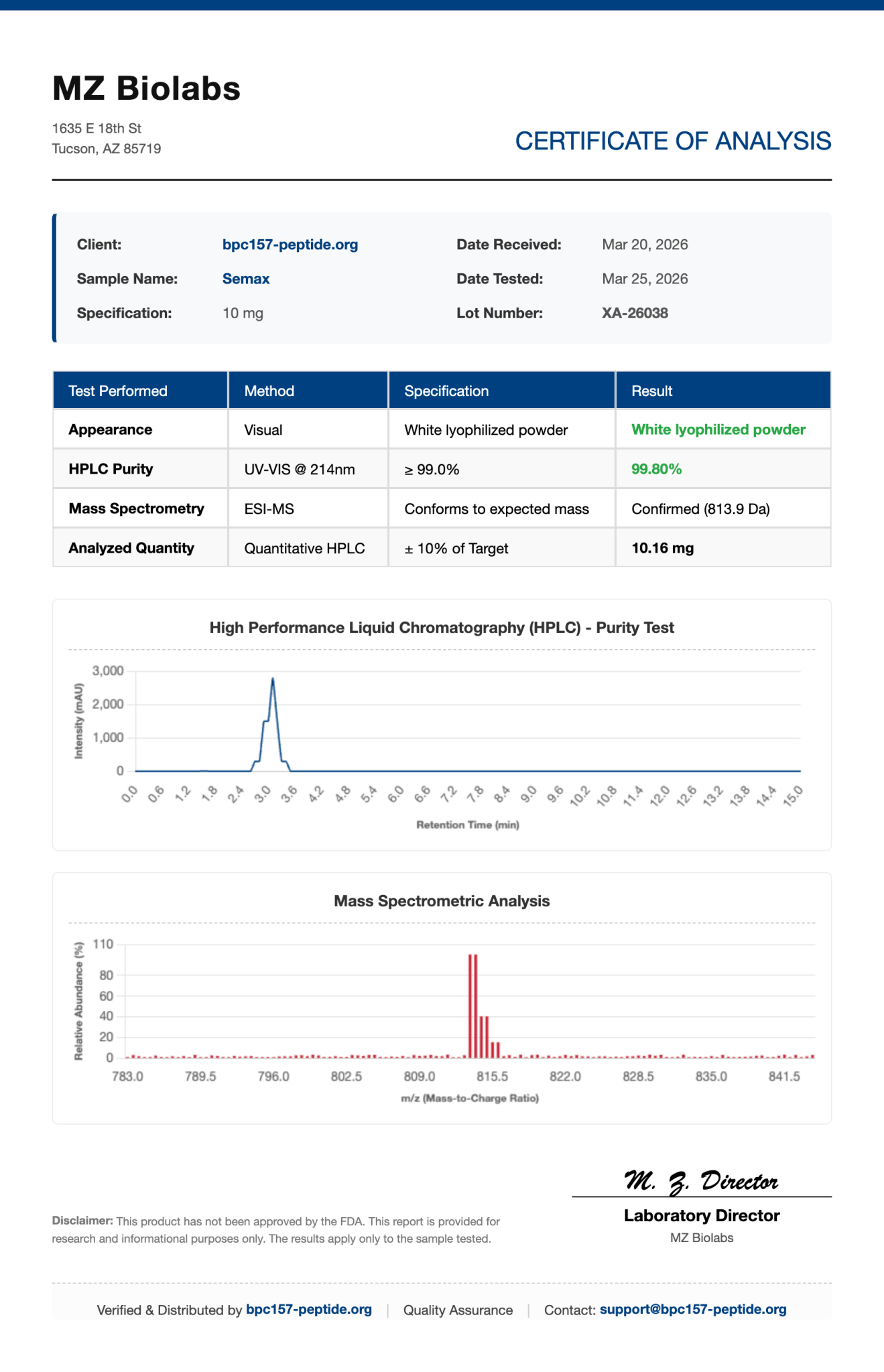
Reference analytical documents are available with this listing. Check the material identity, batch number and test date against the batch supplied; contact us for current batch documentation.
Scientific references
These publications describe the studied molecules and experimental models. They do not certify the identity, quality or effects of a particular supplied batch.
- Semax, BDNF and TrkB in rat hippocampal research
 View report
Faye O. –
The 5mg vial size fits my experimental dosing perfectly, so I never waste leftover reconstituted peptide. The buffered pH slows down molecular degradation after mixing, which reduces unnecessary raw material waste in my lab tests.
Haven Mays –
Lyophilized powder remains free-flowing long-term with no compact sediment buildup. Sterile micro spatula dry sampling halves monthly Semax raw material waste in our lab.
Maya Morris –
I tested 4 different Semax brands side by side, SX5 gives the most consistent brain cell recovery results. Its chemical data matches our lab reference files exactly, so I skip extra ingredient identity checks. I only mix one vial weekly to avoid waste; diluted liquid turns weak after a week in the fridge.
Jasper Hale –
My lab specializes in cerebral blood flow in-vitro testing, and SX5 ensures smooth, predictable dose-response curves across all test groups. Uniform peptide strength means I never need to tweak injection or culture dosing volumes mid-experiment. The 10-unit bulk packs align perfectly with my lab’s recurring monthly testing cycles.
Kian Bennett –
I run brain cell protection lab tests, SX5 Semax makes my test data far more stable than cheap low-purity brands. It’s over 99% pure so random impurities won’t mess up my cell readings. I keep all vials sealed at -20°C away from light; bright lab lights quickly weaken its protective effect. The acetate buffered powder dissolves fully with gentle swirls, no sticky residue stuck on vial walls.