



Description
Basic introduction
MOTS-c is a 16-amino-acid peptide described in research on mitochondrial-derived signaling. Its sequence is associated with the mitochondrial 12S rRNA region, and early investigations examined cellular metabolism and mouse metabolic models.
A mitochondrial origin does not mean that every experimental effect occurs inside mitochondria. The research connects a defined peptide to broader metabolic measurements that depend on the biological model and study conditions.
Mechanism of action · Research context
Mitochondrial-derived sequence
MOTS-c is studied as a mitochondrial-derived peptide. Sequence confirmation provides the starting point for comparison with the material used in published experiments.
Metabolic pathway changes
Early studies examined folate and purine-related metabolism. These observations linked peptide exposure to changes in cellular metabolic pathways rather than establishing a single direct receptor mechanism.
AMPK-associated responses
AMPK-related signaling featured in the original research. Such signaling measurements should be considered alongside the measured metabolic phenotype rather than treated as a complete explanation of every effect.
Extended research considerations
Cellular metabolic assays
Specify whether the endpoint concerns metabolites, signaling or energy use. Different assay types capture different stages of the response and may not change in parallel.
Animal-model context
The original work included mouse metabolic experiments. Results from those models should remain distinct from claims about human exercise performance or weight management.
Comparative material quality
Compare the actual peptide sequence, content and analytical profile. Shared mitochondrial-research terminology does not make MOTS-c interchangeable with SS-31 or a cofactor such as NAD+.
Material and packaging
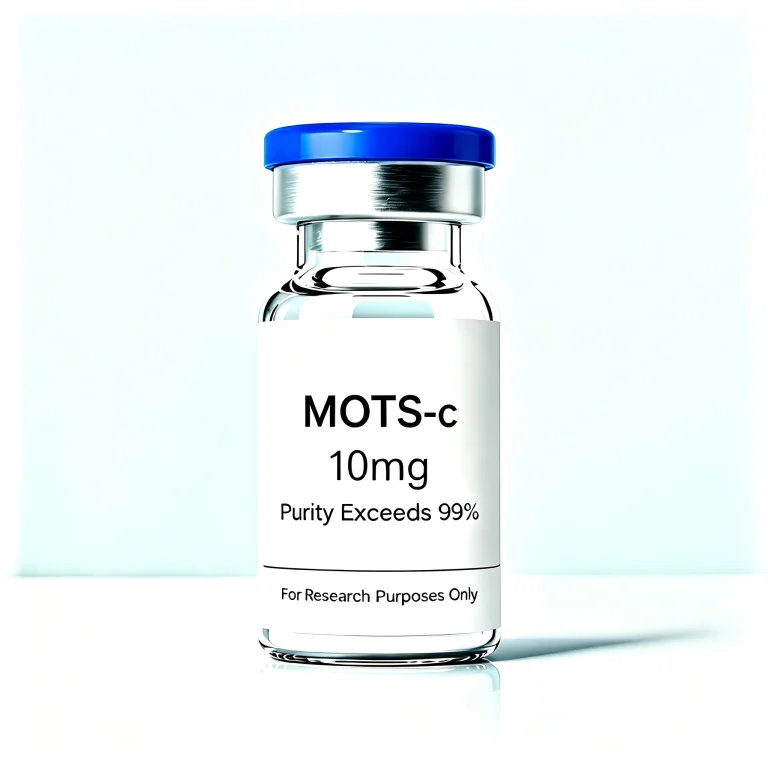
Listed appearance: White Lyophilized Powder.
Available kit specifications: 10 mg × 10 vials; 20 mg × 10 vials; 40 mg × 10 vials. Select an option above to view its current price and availability.
Storage and handling
Source-listed storage condition: Store at -20°C (Protect from light and moisture). Follow the handling instructions supplied with the actual batch and your laboratory's procedures.
Analytical documentation
Reference analytical documents are available with this listing. Check the material identity, batch number and test date against the batch supplied; contact us for current batch documentation.
Scientific references
These publications describe the studied molecules and experimental models. They do not certify the identity, quality or effects of a particular supplied batch.
- Original MOTS-c metabolic research (Cell Metabolism, 2015)
 View report
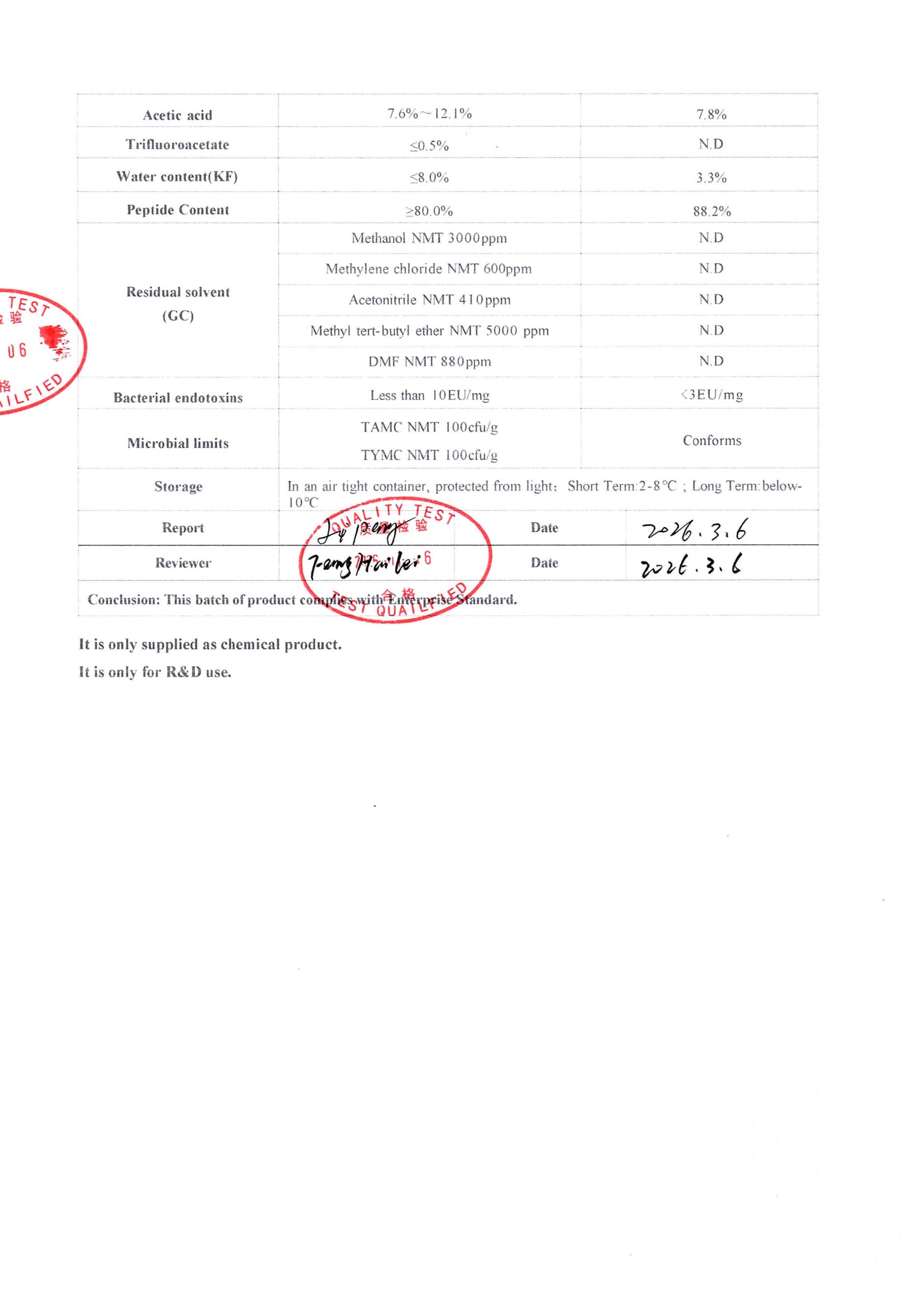 View report
Jasper Hale –
I run mitochondrial metabolism lab research, MS10 MOTS-C delivers steady cell assay data far better than low-grade brands. Over 99% purity cuts impurity interference on energy pathway tests. I store sealed vials at -20°C away from light; long light exposure quickly weakens its metabolic regulation effect. White powder dissolves fully with gentle swirls with no glass residue left.
Dorian Travis –
The 10-vial sale pack greatly lowers my monthly lab supply budget, cheaper than buying single vials separately. Its neutral 5.0–7.0 pH fits all my standard cell culture media, no extra buffer liquid needed for pH adjustment. All glass bottles arrived intact without cracks or leaks during cross-border shipping.
Rory Benton –
This MS10 Human MOTS-C is fine white lyophilized peptide powder with HPLC purity above 99%. Long-term lab storage must be sealed vials kept at -20°C away from light and humidity. Stable dark frozen storage prevents hydrolysis of its mitochondrial-targeted peptide chain, sustaining consistent energy metabolism activity for aging, insulin sensitivity and fat oxidation research over multiple months.
Kael Hargrove –
This MS10 Human MOTS-C is pure white lyophilized peptide powder with HPLC purity ≥99%. Long-term lab preservation requires fully sealed vials stored at -20°C and completely shielded from light and moisture. Constant dark frozen storage stabilizes its mitochondrial-targeted peptide chain to avoid hydrolysis, sustaining consistent metabolic regulation activity for aging, fat oxidation and mitochondrial function research over multiple months.
Cian Knight –
The refined industrial lyophilization process drastically reduces peptide adhesion to inner glass vial walls after dissolution. I recover nearly the full labeled 10mg powder mass from every vial, eliminating major dosing inaccuracies in quantitative mitochondrial receptor binding and insulin sensitivity signaling research.