

Description
Basic introduction
BPC-157 is a synthetic pentadecapeptide investigated in preclinical tissue-response models. This is a single-material BPC-157 listing. It should not be confused with a combination kit containing thymosin-related peptides or other compounds.
The relevant research includes cultured tendon cells and animal injury models. Those experiments provide context for laboratory investigation, while the identity and composition of the supplied material must be established from its batch documentation.
Mechanism of action · Research context
Tendon cell response
Rat tendon fibroblasts have been studied with BPC-157. One primary study examined changes in growth-hormone receptor expression, providing a specific cellular endpoint rather than a general measure of tissue healing.
Growth-factor responsiveness
Receptor expression can influence a subsequent cellular response. In the same experimental setting, investigators evaluated signaling after growth-hormone exposure, including the JAK2 pathway; this does not establish direct growth-hormone activity for BPC-157.
Model-specific interpretation
Cell assays and animal injury studies answer different questions. Viability, migration, receptor abundance and tissue mechanics need separate measurements, with comparison groups appropriate to each experimental model.
Extended research considerations
Connective-tissue experiments
A useful study record identifies the tendon or cell source, passage, culture conditions and measurement interval. Differences in these factors can affect comparisons between publications and between laboratory batches.
Identity and purity
Confirm the peptide sequence and analytical identity before comparing results. Chromatographic purity is a separate measurement from peptide content, counterion composition or biological activity.
Single material versus blends
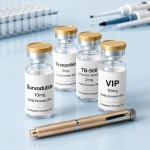
Combination experiments need separate component controls. Evidence from BPC-157 alone cannot establish the effect of a BPC-157/TB-500 mixture, and this product description does not represent the vial as a blend.
Material and packaging
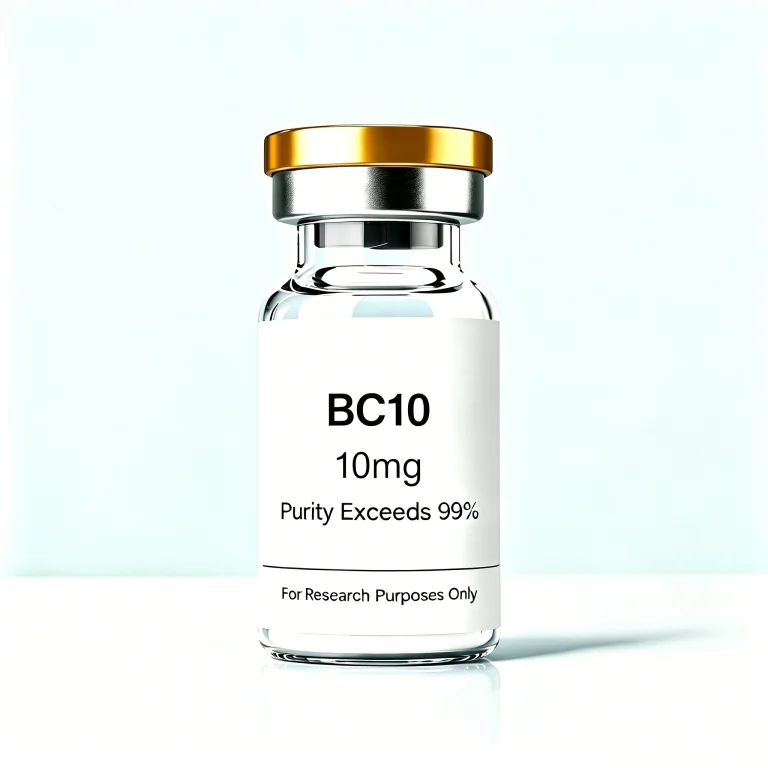
Listed appearance: White Lyophilized Powder.
Available kit specifications: 5 mg × 10 vials; 10 mg × 10 vials. Select an option above to view its current price and availability.
Storage and handling
Source-listed storage condition: Store at 20°C to 25°C (Do not freeze). Follow the handling instructions supplied with the actual batch and your laboratory's procedures.
Analytical documentation
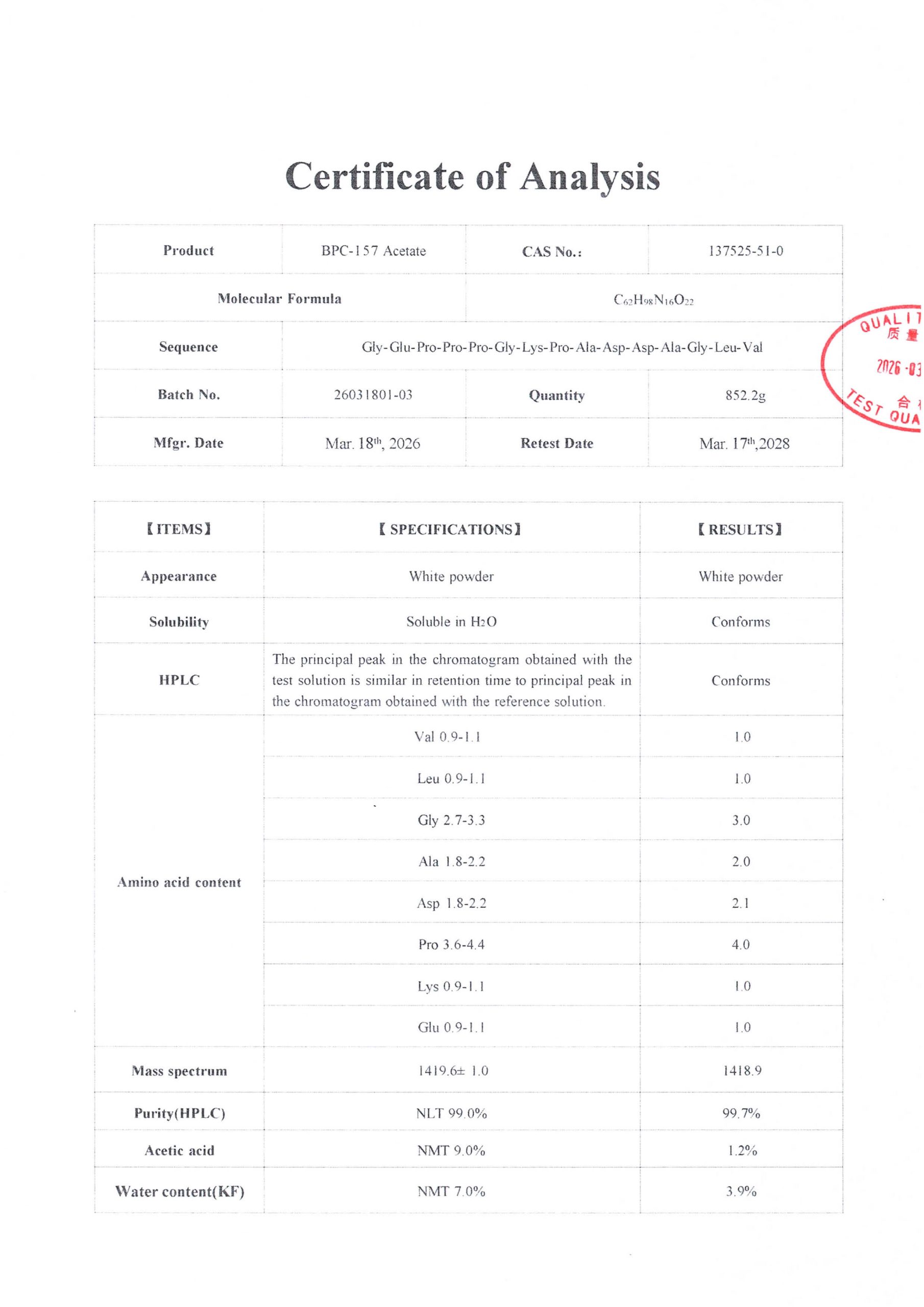
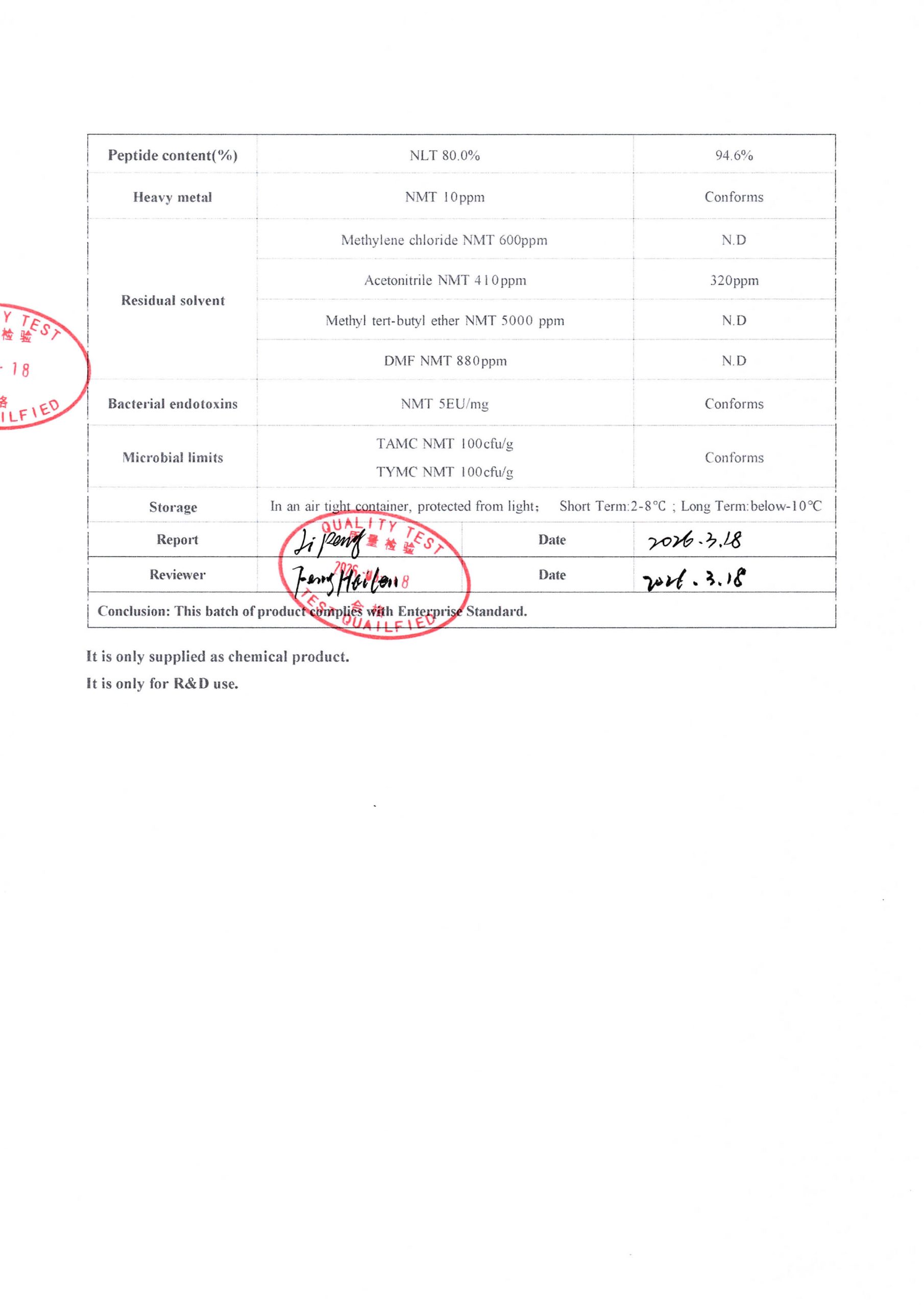
Reference analytical documents are available with this listing. Check the material identity, batch number and test date against the batch supplied; contact us for current batch documentation.
Scientific references
These publications describe the studied molecules and experimental models. They do not certify the identity, quality or effects of a particular supplied batch.
- BPC-157 and growth-hormone receptor expression in tendon fibroblasts
 View report
 View report
Arden C. –
Direct light exposure triggers slow photo-oxidation of white BPC-157 powder. I store all sealed vials inside opaque dark storage cabinets, and unopened stock stays bright white with no yellowing after over one month of ambient storage. Reconstituted peptide liquid never develops cloudiness or solid precipitates during cold storage.
Elias G. –
The shipping packaging uses individual shock-absorbent foam slots for each glass vial to prevent collision damage. Over three separate international bulk orders, zero vials arrived cracked, leaking or contaminated during long overseas transit.
Brynn F. –
This BC5 BPC-157 lyophilized powder is stabilized with acetate buffer, delivering verified 99%+ HPLC purity. Stored steadily at 20–25°C without freezing, the peptide’s full amino acid chain stays intact, with zero fragmentation after weeks of cabinet storage away from harsh light.
Kalen Pruitt –
My lab focuses on BPC-157 dose-response injury assays. Uniform cross-vial potency means I never adjust dosing volumes mid-experiment. 10-unit packs fit our monthly testing cycles perfectly.
Freya H. –
This BPC-157 peptide isn’t limited to basic wound healing research. I also utilize it for gastrointestinal mucosal repair cell culture studies, and its stable 4.0–6.0 pH range removes the need to add extra neutralizing buffer agents to my culture media formulas.