

Description
Basic introduction
BPC-157 is a synthetic pentadecapeptide investigated in preclinical tissue-response models. This is a single-material BPC-157 listing. It should not be confused with a combination kit containing thymosin-related peptides or other compounds.
The relevant research includes cultured tendon cells and animal injury models. Those experiments provide context for laboratory investigation, while the identity and composition of the supplied material must be established from its batch documentation.
Mechanism of action · Research context
Tendon cell response
Rat tendon fibroblasts have been studied with BPC-157. One primary study examined changes in growth-hormone receptor expression, providing a specific cellular endpoint rather than a general measure of tissue healing.
Growth-factor responsiveness
Receptor expression can influence a subsequent cellular response. In the same experimental setting, investigators evaluated signaling after growth-hormone exposure, including the JAK2 pathway; this does not establish direct growth-hormone activity for BPC-157.
Model-specific interpretation
Cell assays and animal injury studies answer different questions. Viability, migration, receptor abundance and tissue mechanics need separate measurements, with comparison groups appropriate to each experimental model.
Extended research considerations
Connective-tissue experiments
A useful study record identifies the tendon or cell source, passage, culture conditions and measurement interval. Differences in these factors can affect comparisons between publications and between laboratory batches.
Identity and purity
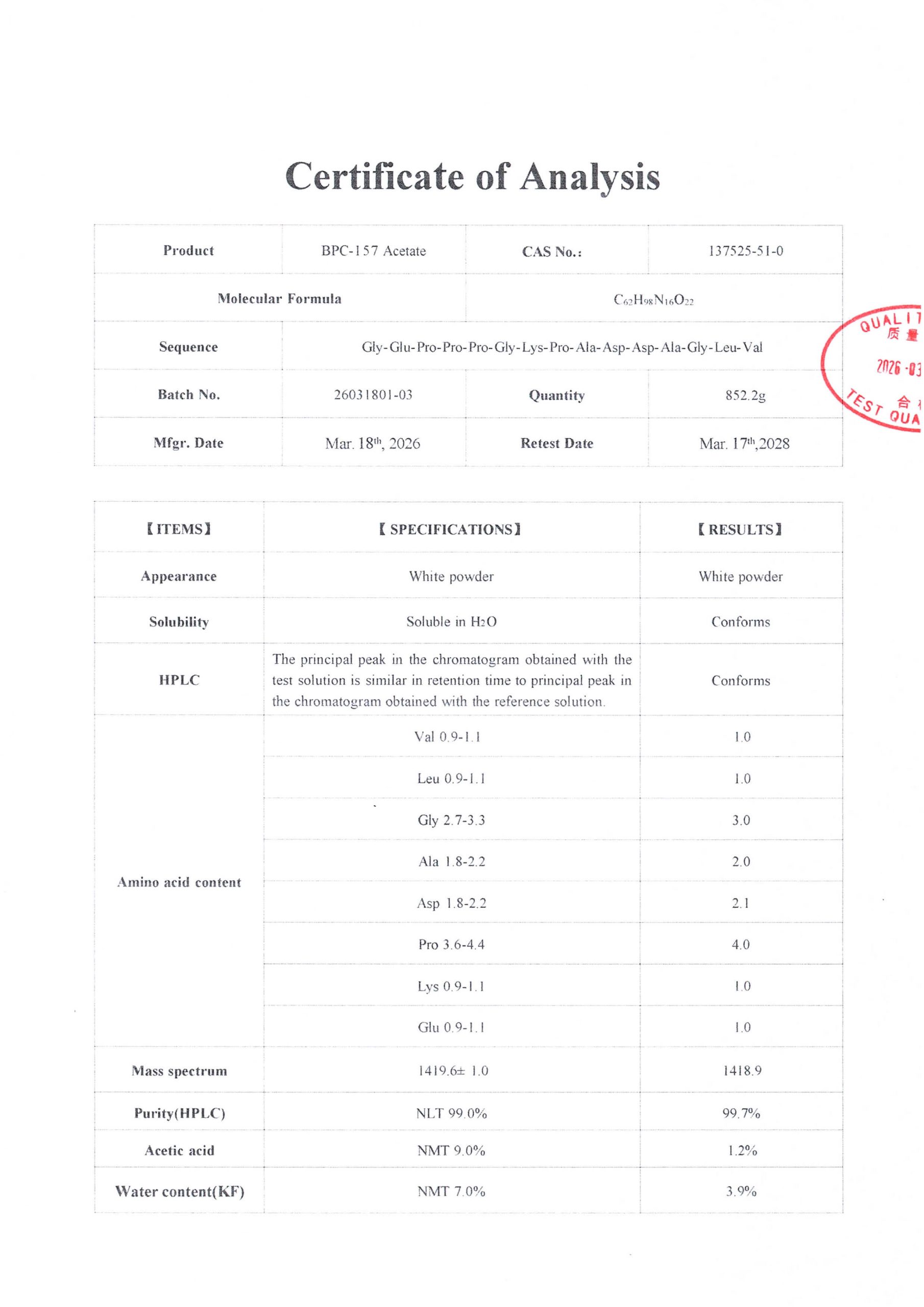
Confirm the peptide sequence and analytical identity before comparing results. Chromatographic purity is a separate measurement from peptide content, counterion composition or biological activity.
Single material versus blends
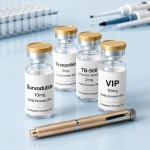
Combination experiments need separate component controls. Evidence from BPC-157 alone cannot establish the effect of a BPC-157/TB-500 mixture, and this product description does not represent the vial as a blend.
Material and packaging
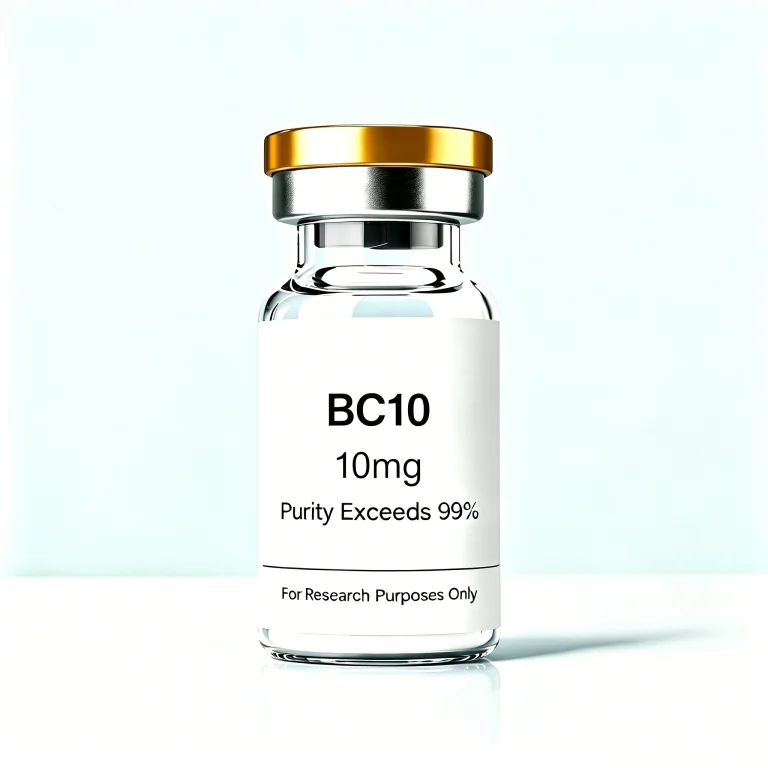
Listed appearance: White Lyophilized Powder.
Available kit specifications: 5 mg × 10 vials; 10 mg × 10 vials. Select an option above to view its current price and availability.
Storage and handling
Source-listed storage condition: Store at 20°C to 25°C (Do not freeze). Follow the handling instructions supplied with the actual batch and your laboratory's procedures.
Analytical documentation
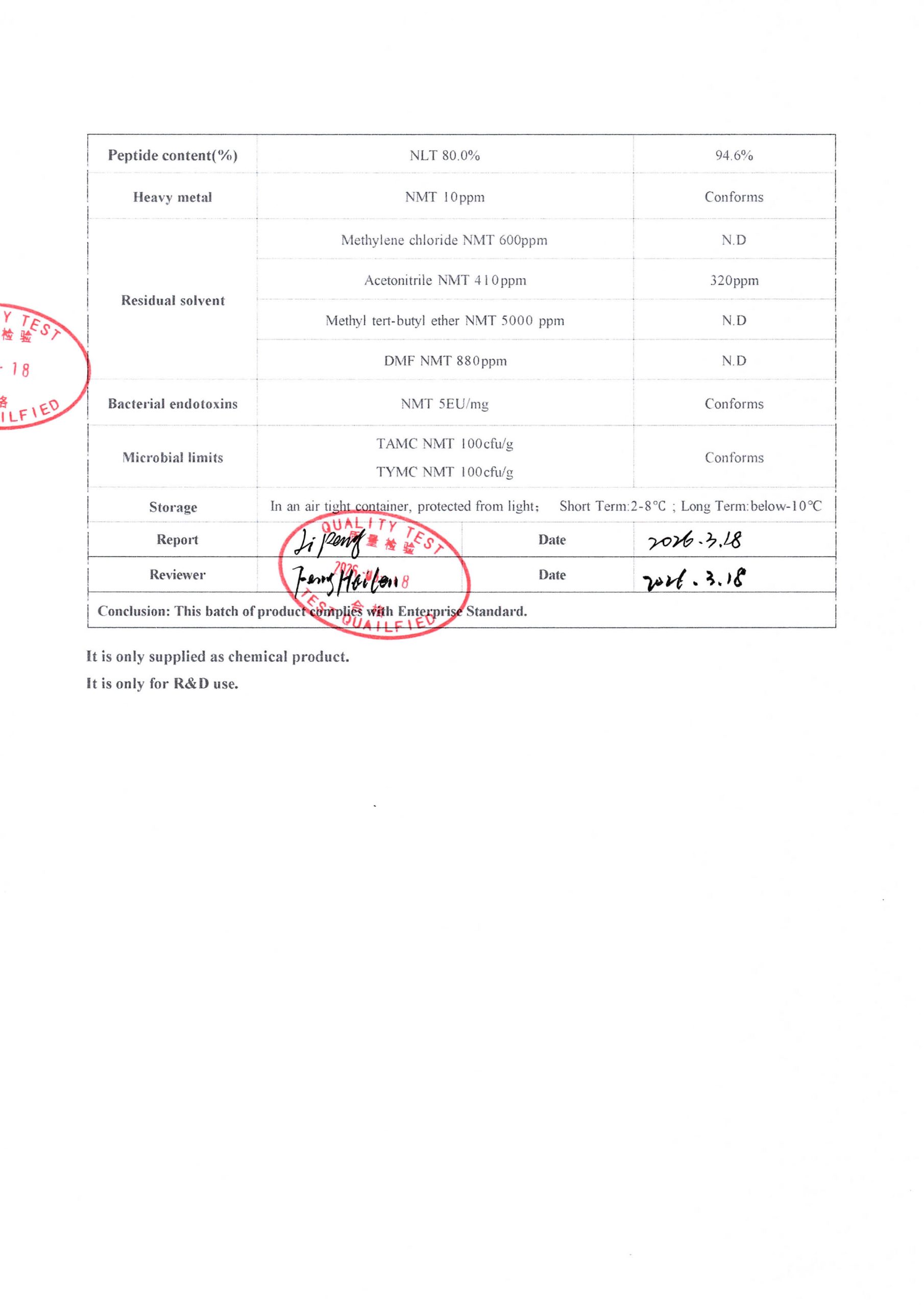
Reference analytical documents are available with this listing. Check the material identity, batch number and test date against the batch supplied; contact us for current batch documentation.
Scientific references
These publications describe the studied molecules and experimental models. They do not certify the identity, quality or effects of a particular supplied batch.
- BPC-157 and growth-hormone receptor expression in tendon fibroblasts
 View report
 View report
Wade Y. –
The CAS number, molecular formula and 1419.53 G/Mol molecular weight perfectly match official biochemical reference datasheets. This research-grade peptide contains no inert bulking fillers or fragmented peptide impurities, and controlled room-temperature storage eliminates freeze-thaw induced protein unfolding.
Yvette A. –
The 5mg single vial filling size is perfectly calibrated for my small-scale in vitro wound repair trials. I only reconstitute one vial per testing session, eliminating waste of costly diluted BPC-157 that rapidly loses biological repair activity once mixed with reconstitution solvent.
Galen K. –
The 5mg single-vial fill volume matches my small-scale in vitro trial dosing perfectly. I only mix solvent with one vial per experiment, eliminating waste of costly reconstituted peptide that loses potency over time. The buffered pH slows molecular degradation significantly.
Freya U. –
Molecular weight fully matches the official specification sheet. This research-grade peptide contains no extra fillers or impurities. As long as freezing is avoided, biological activity remains steady month after month.
Xanthe Z. –
I’ve tested BPC-157 lyophilized batches from multiple suppliers side-by-side, and this acetate-stabilized BC5 variant shows drastically less glass-wall adhesion and aggregation post-dissolution. Slow gentle swirling fully solubilizes powder; harsh shaking will break the repair peptide’s amino acid sequence and ruin cell assay results.