

Description
Basic introduction
Vasoactive intestinal peptide (VIP) is a neuroendocrine signaling peptide found in nervous, gastrointestinal and other tissues. This listing supplies a synthetic research material for investigating receptor signaling, cellular responses and peptide handling in laboratory models.
VIP research spans several biological systems, so an experimental result depends on the receptor subtype, cell type and endpoint being measured. A vascular response, an inflammatory marker and a neuronal signaling response should be treated as separate observations rather than interchangeable measures of activity.
Mechanism of action · Research context
VPAC receptor signaling
VIP interacts with VPAC-family receptors. These G protein-coupled receptors can stimulate adenylyl cyclase and increase intracellular cyclic AMP. Receptor-selective controls help distinguish VIP responses from those of related peptides such as PACAP.
cAMP and downstream responses
Signal amplitude and timing depend on the experimental model. Live-cell studies in rat cortical tissue measured distinct cAMP/PKA responses to VIP and related ligands; a single endpoint measurement may miss those differences.
Vascular model differences
VIP responses vary between vascular compartments. Work in porcine basilar arteries linked receptor localization to relaxation responses, illustrating why species, tissue preparation and endothelial integrity belong in the experimental record.
Immune-cell differentiation
VIP has been studied in human monocyte-derived dendritic cells. A primary study reported an IL-10-producing, tolerogenic population capable of supporting regulatory T-cell responses. This is a defined cell-culture finding, not proof of reversing systemic autoimmune disease.
Epithelial barrier pathways
Barrier effects depend on the tissue and experimental challenge. Work in infection models examined tight-junction localization and MLCK-related signaling; other intestinal preparations showed different permeability responses. These findings do not support a universal claim that VIP always reduces barrier leakage.
Extended research considerations
Neuronal cAMP/PKA responses
Live-cell measurements provide a time-resolved view of neuronal signaling. Rat cortical research compared VIP with related neuropeptides and showed why receptor identity, response amplitude and recovery time should be recorded separately.
Pancreatic and metabolic research
Isolated mouse-islet experiments examined insulin release, calcium uptake and electrical activity after VIP exposure. A separate transgenic model co-expressed VIP and PHM-27, so its metabolic findings cannot be attributed to a standalone VIP vial alone.
Inflammatory and epithelial endpoints
Cytokine output, regulatory-cell phenotype and barrier permeability are distinct outcomes. Combining those measurements can clarify a model, while a change in one endpoint does not establish complete immune restoration or a clinical treatment effect.
Material and packaging
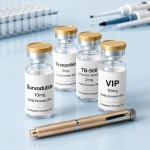
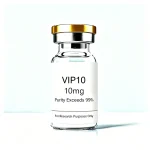
Listed appearance: White Lyophilized Powder.
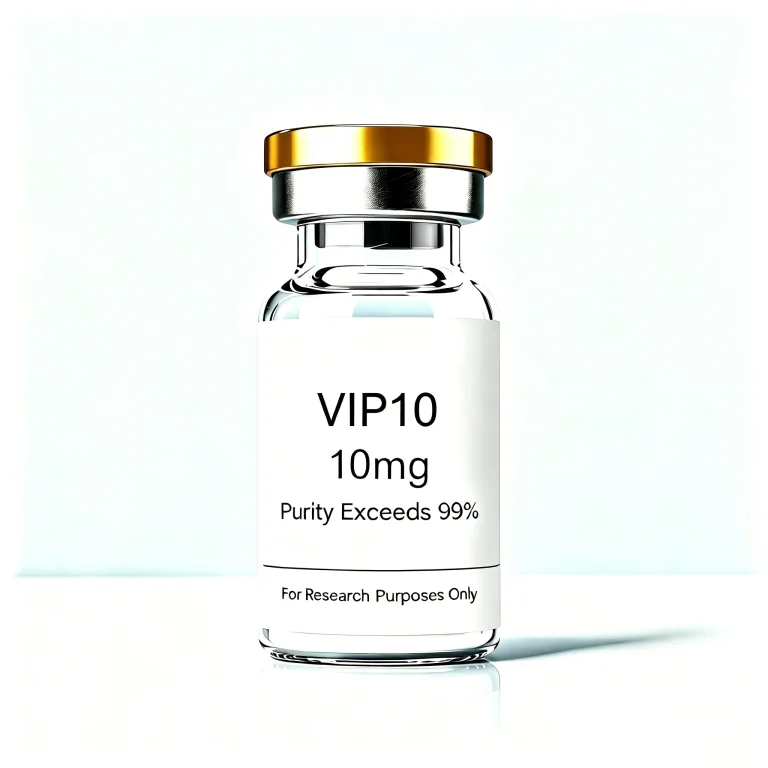
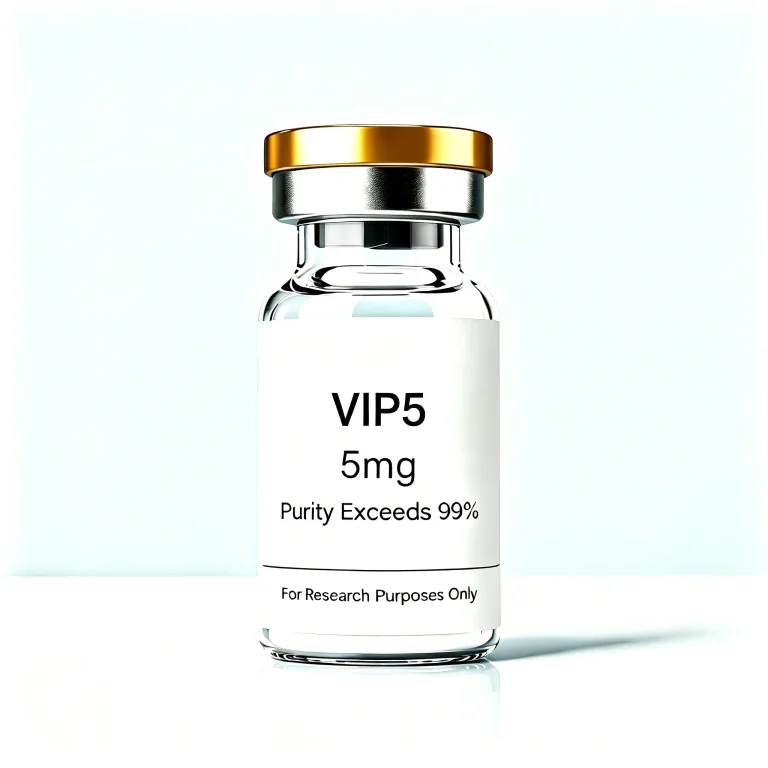
Available kit specifications: 5 mg × 10 vials; 10 ml × 10 vials. Select an option above to view its current price and availability.
Storage and handling
Source-listed storage condition: Store at 2°C to 8°C (Refrigerated)/-20°C (Long-term). Follow the handling instructions supplied with the actual batch and your laboratory's procedures.
Analytical documentation
Reference analytical documents are available with this listing. Check the material identity, batch number and test date against the batch supplied; contact us for current batch documentation.
Scientific references
These publications describe the studied molecules and experimental models. They do not certify the identity, quality or effects of a particular supplied batch.
- VIP and cAMP/PKA signaling in rat cortex
- VIP receptors in a porcine vascular model
- VIP and human tolerogenic dendritic cells
- VIP and tight-junction responses in infection models
- Tissue-dependent intestinal permeability responses
- VIP in isolated mouse pancreatic islets
- VIP/PHM-27 transgenic pancreatic research
 View report
Hesper S. –
This 10-vial bulk pack includes a limited-time promotional markdown that significantly cuts my monthly lab raw material overhead. Vial-to-vial powder texture, concentration and purity show zero measurable deviation, making all my intestinal signaling experimental data highly repeatable batch after batch.
Linden N. –
The balanced acetate buffer blend drastically cuts down peptide residue stuck to inner vial glass after mixing. I recover nearly 100% of the labeled 5mg lyophilized powder each time, eliminating major dosing errors in quantitative vasoactive receptor binding research.
Orin Q. –
Two volume specifications (5mg and 10mg per vial) fit all my research scales perfectly. The 5mg vial is ideal for small preliminary screening trials; I only reconstitute one vial per experiment to avoid wasting diluted VIP that quickly loses biological activity once mixed with solvent.
Niamh P. –
This 10-vial bulk pack has a great limited-time sale discount that cuts my monthly lab raw material costs noticeably. Vial-to-vial powder texture, concentration and purity show zero variance, making intestinal and vascular signaling experimental data highly repeatable across test batches.
8
Source reviewer –
1