
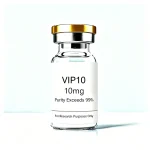
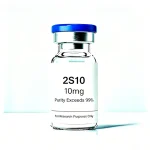

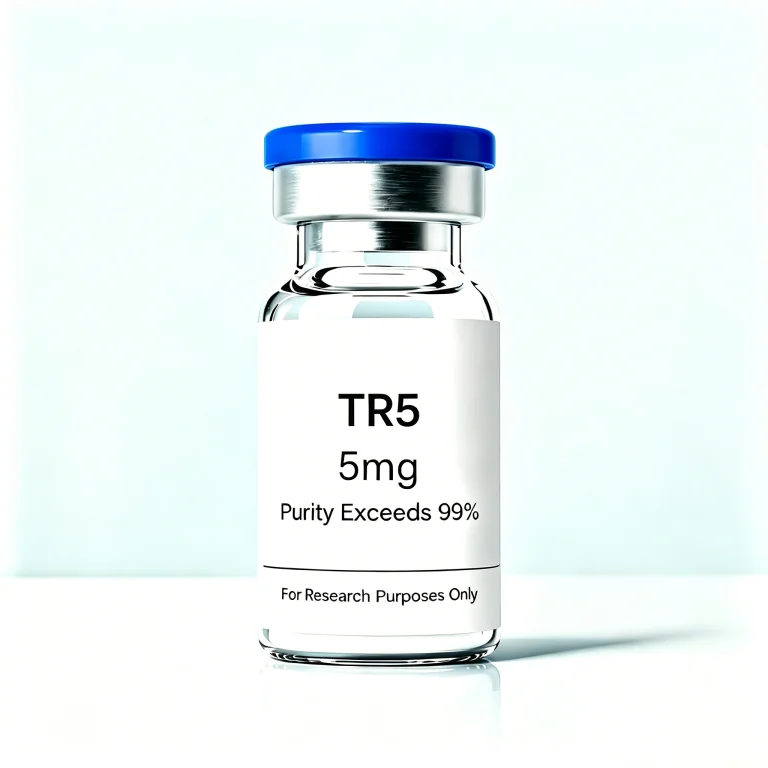
Description
Basic introduction
Tirzepatide is a synthetic peptide investigated through both GIP and GLP-1 receptor pathways. Its structure includes a lipid modification, which is relevant to the pharmacological preparation described in the scientific literature.
The research spans receptor assays, animal models and clinical studies. These evidence levels should remain separate: a receptor response characterizes one aspect of a molecule, while a clinical study concerns a defined formulation, population and protocol.
Mechanism of action · Research context
GIP receptor response
Tirzepatide was characterized as a GIP receptor agonist. Receptor-specific assays help define this activity independently of its response at the GLP-1 receptor.
GLP-1 receptor response
GLP-1 receptor activity provides a second experimental pathway. Comparing signaling in matched assay systems is more informative than assuming equal activity at both receptors from the dual-agonist label alone.
Integrated metabolic effects
Whole-system responses involve more than receptor activation. The discovery program examined glucose-dependent insulin secretion and metabolic outcomes across several experimental settings.
Extended research considerations
Receptor assay controls
Identify the receptor expression system and readout. Differences in receptor abundance, assay timing or signal amplification can affect comparisons between GIP and GLP-1 responses.
Formulation and exposure
Lipid modification influences the tested preparation. Analytical identity, aggregation and compatibility with the assay medium are separate from the receptor-response result.
Clinical evidence context
Clinical trials evaluate specific pharmaceutical preparations. Their outcomes do not certify the identity, sterility or clinical suitability of a research product sold independently of those studies.
Material and packaging
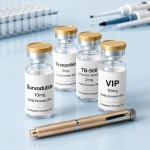
Available kit specifications: 5 mg × 10 vials; 10 mg × 10 vials; 15 mg × 10 vials; 20 mg × 10 vials; 30 mg × 10 vials; 40 mg × 10 vials; 50 mg × 10 vials; 60 mg × 10 vials; 100 mg × 10 vials; 120 mg × 10 vials. Select an option above to view its current price and availability.
Storage and handling
Source-listed storage condition: Store at 20°C to 25°C (Do not freeze). Follow the handling instructions supplied with the actual batch and your laboratory's procedures.
Analytical documentation
Reference analytical documents are available with this listing. Check the material identity, batch number and test date against the batch supplied; contact us for current batch documentation.
Scientific references
These publications describe the studied molecules and experimental models. They do not certify the identity, quality or effects of a particular supplied batch.
- Discovery and experimental characterization of LY3298176
- Phase 2 tirzepatide clinical research
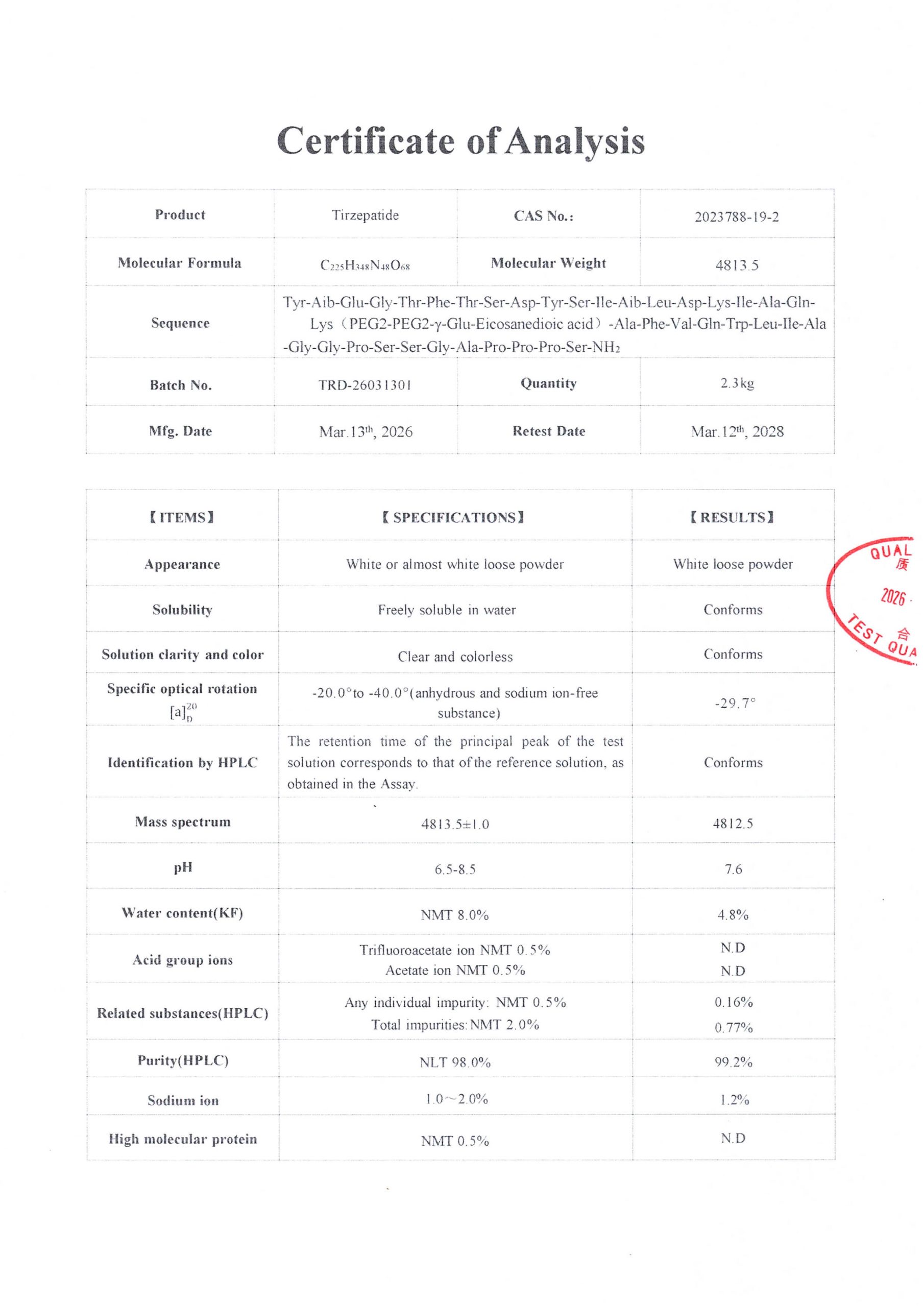 View report
 View report
Clara Montgomery –
Buying the 10-vial bulk pack on sale greatly cuts my lab’s peptide expenses. My long-term metabolism trials run for months, every new batch keeps identical purity and strength. Different vial strengths work for both small screening and large animal trials.
Sage Kade –
Every overseas shipment uses foam dividers to protect each glass vial separately. I’ve ordered four bulk batches this year, zero cracked or leaking bottles. Packaging holds steady room temperature during transit to protect peptide activity.
Sage Kade –
Every overseas shipment uses foam dividers to protect each glass vial separately. I ordered four bulk batches over the year, zero cracked or leaking bottles. Packaging holds steady room temperature during transit to protect peptide activity.
Finn K. –
This bulk pack perfectly covers my full cutting cycle, so I don’t need to place multiple orders. Fat loss stays steady week after week, and I never lose lean muscle mass. The white powder has no clumping or discoloration right out of the packaging.
Jett Ross –
Bright lab lamps weaken this peptide’s activity very quickly. After I moved all TR10 stock into dark storage cabinets, my test results became much more consistent. Other brands never clearly remind users about light-induced degradation.