

Description
Basic introduction
Tesamorelin is a modified growth-hormone-releasing hormone analog. It has been studied through endocrine and body-composition endpoints, including clinical research in specific HIV-associated abdominal-fat populations.
Those trial populations and pharmaceutical preparations are part of the evidence context. They should not be generalized into weight-loss promises for a catalog reagent or assumed to validate the composition of an independently supplied research vial.
Mechanism of action · Research context
GHRH-related response
Tesamorelin acts within the GHRH signaling system. Research examines downstream growth-hormone and IGF-1 responses, while recognizing that endogenous feedback influences the complete endocrine result.
Body-composition endpoints
Imaging distinguishes different fat compartments. Published studies measured visceral adipose tissue and, in selected work, liver fat; these are more specific outcomes than a change in scale weight.
Duration and withdrawal
Effects observed during a study may change after discontinuation. Follow-up in a randomized trial demonstrated why on-treatment observations and persistence after withdrawal should be evaluated separately.
Extended research considerations
Population-specific evidence
The cited clinical studies enrolled defined patient groups. Their findings do not establish the same response in healthy populations or in unrelated experimental models.
Metabolic measurements
Glucose-related measures and body composition can move differently. A protocol examining endocrine responses should state its metabolic endpoints rather than assuming that one favorable measurement captures all effects.
Batch-specific characterization
Published drug studies do not certify a research batch. Confirm identity, content and the required documentation for the actual material before using it in a comparative assay.
Material and packaging
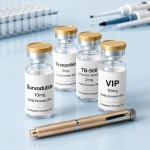
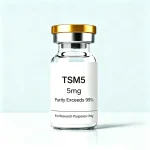
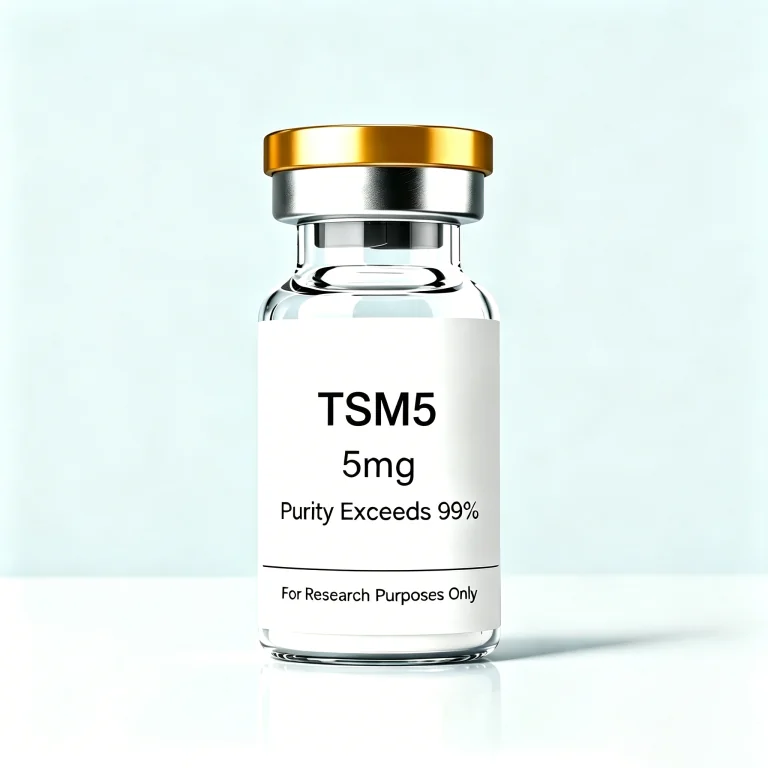
Listed appearance: White Lyophilized Powder.
Available kit specifications: 2 mg × 10 vials; 5 mg × 10 vials; 10 mg × 10 vials. Select an option above to view its current price and availability.
Storage and handling
Source-listed storage condition: Store at -20°C (Protect from light and moisture). Follow the handling instructions supplied with the actual batch and your laboratory's procedures.
Analytical documentation
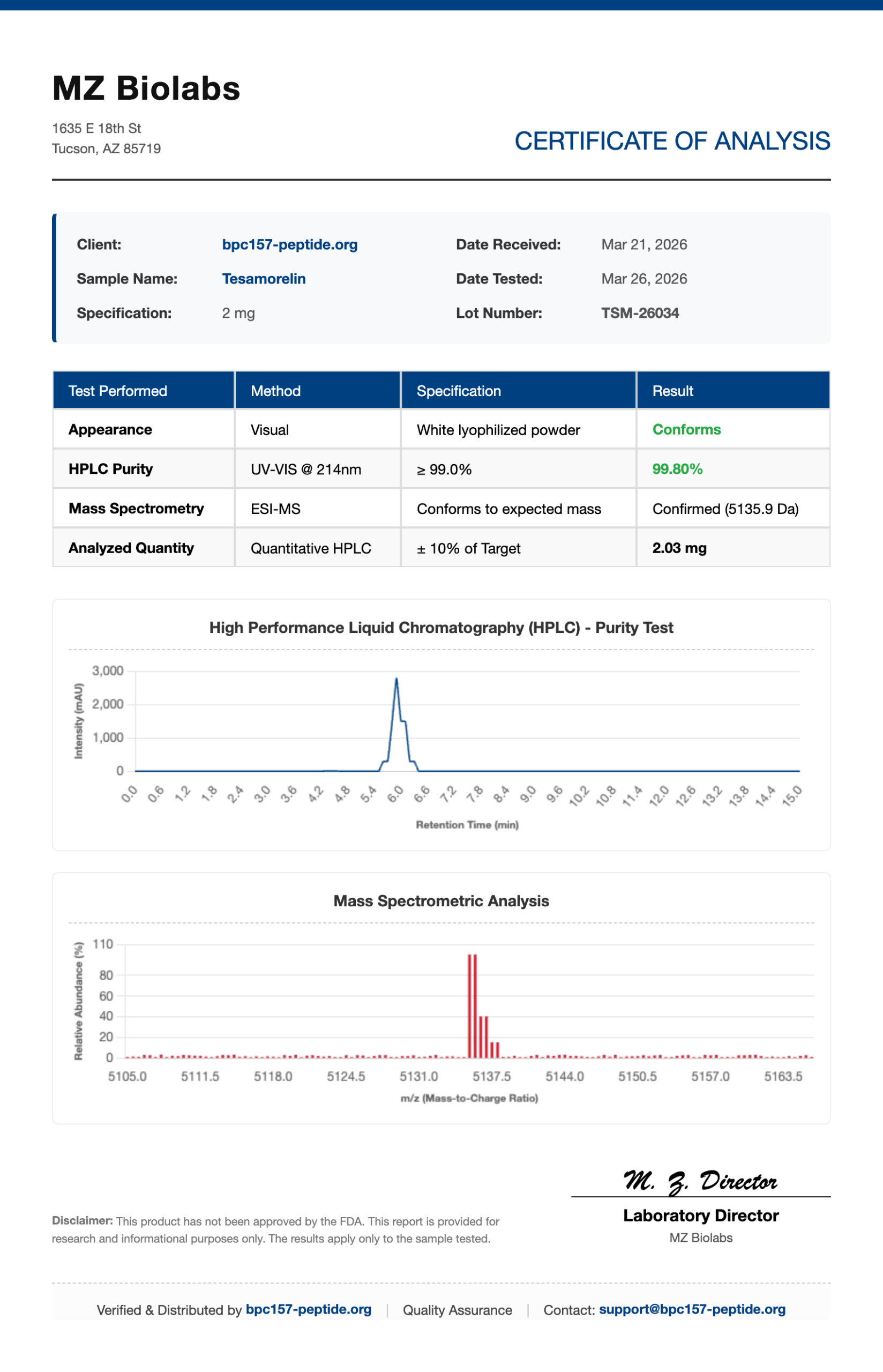
Reference analytical documents are available with this listing. Check the material identity, batch number and test date against the batch supplied; contact us for current batch documentation.
Scientific references
These publications describe the studied molecules and experimental models. They do not certify the identity, quality or effects of a particular supplied batch.
- Tesamorelin randomized study and follow-up
- Tesamorelin, visceral fat and liver-fat measurements
 View report
Maren Ashworth –
Three vial sizes fit all trial stages: 2mg for small screening, 5mg for routine mouse tests, 10mg for high-dose cohorts. Batches are perfectly uniform in potency. Gold cap seals out moisture well after repeated punctures.
Ruth Coyle –
A trainee stored vial in fluctuating frost-free freezer, activity permanently damaged. I posted clear storage rules by the peptide shelf to prevent repeat errors.
Tobias Graft –
10-vial bulk packs cut lab peptide costs sharply. 4.0–6.0 pH matches standard cell media, no buffer adjustment needed. All vials arrive intact in foam packaging for overseas shipping.
Eliza Meeks –
Four brands tested side-by-side, TSM5 has the most consistent hormone release curves. Chemical specs match lab reference databases, skipping identity verification steps. Only reconstitute one vial weekly to avoid waste.
Ingram H. –
This bulk 10-vial kit has an excellent discounted price during the sale. Concentration and purity are uniform across all vials, so my in vivo test data remains highly repeatable from the first vial all the way to the last one.