
Description
Basic introduction
Retatrutide, also described in research as LY3437943, is a synthetic peptide studied at GIP, GLP-1 and glucagon receptors. This three-receptor profile distinguishes its experimental context from a dual GIP/GLP-1 agonist.
Receptor activity and integrated metabolic responses are different levels of evidence. Published studies of a defined research or pharmaceutical preparation do not establish the identity or performance of every material carrying the same name.
Mechanism of action · Research context
GIP and GLP-1 pathways
Two parts of the profile involve incretin receptors. Each receptor response should be characterized separately before interpreting a combined cellular or physiological result.
Glucagon receptor component
Glucagon receptor activity adds a third pathway. Its inclusion makes the molecule a different experimental comparator from compounds that act only at GIP and GLP-1 receptors.
Combined response
Three receptor activities do not imply identical contributions. The measured response depends on the model, receptor expression and endpoint selected, so a single assay cannot fully characterize the profile.
Extended research considerations
Multi-receptor comparisons
Use matched methods when comparing receptor activity. Separate curves and appropriate reference ligands help distinguish assay differences from differences intrinsic to the test material.
Metabolic research scope
Preclinical and early clinical studies address different questions. Keep cell-based signaling, whole-organism metabolism and observations in a defined trial population clearly separated.
Material characterization
Verify sequence, modifications and relevant analytical properties. A triple-agonist description is a scientific classification, not a batch-specific certificate of composition or activity.
Material and packaging
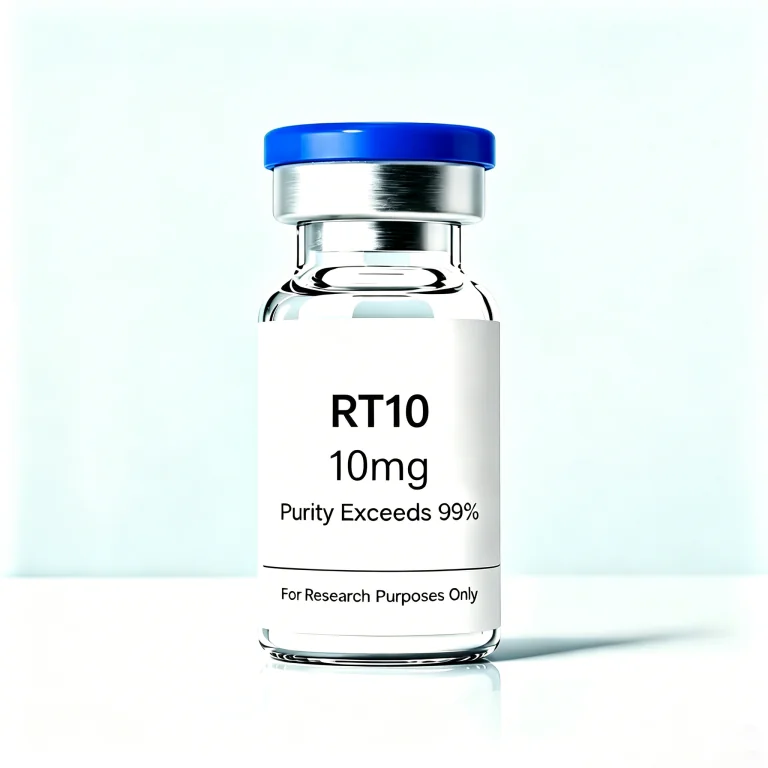
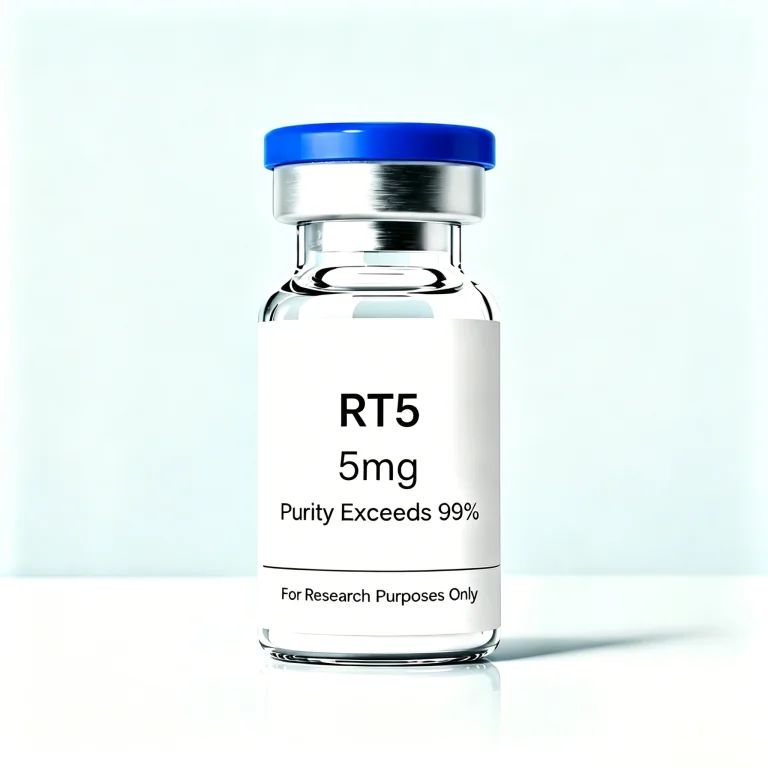
Available kit specifications: 5 mg × 10 vials; 10 mg × 10 vials; 15 mg × 10 vials; 20 mg × 10 vials; 30 mg × 10 vials; 40 mg × 10 vials; 50 mg × 10 vials; 60 mg × 10 vials; 100 mg × 10 vials. Select an option above to view its current price and availability.
Storage and handling
Source-listed storage condition: Store at 20°C to 25°C (Do not freeze). Follow the handling instructions supplied with the actual batch and your laboratory's procedures.
Analytical documentation
Reference analytical documents are available with this listing. Check the material identity, batch number and test date against the batch supplied; contact us for current batch documentation.
Scientific references
These publications describe the studied molecules and experimental models. They do not certify the identity, quality or effects of a particular supplied batch.
- LY3437943 triple-receptor agonist research
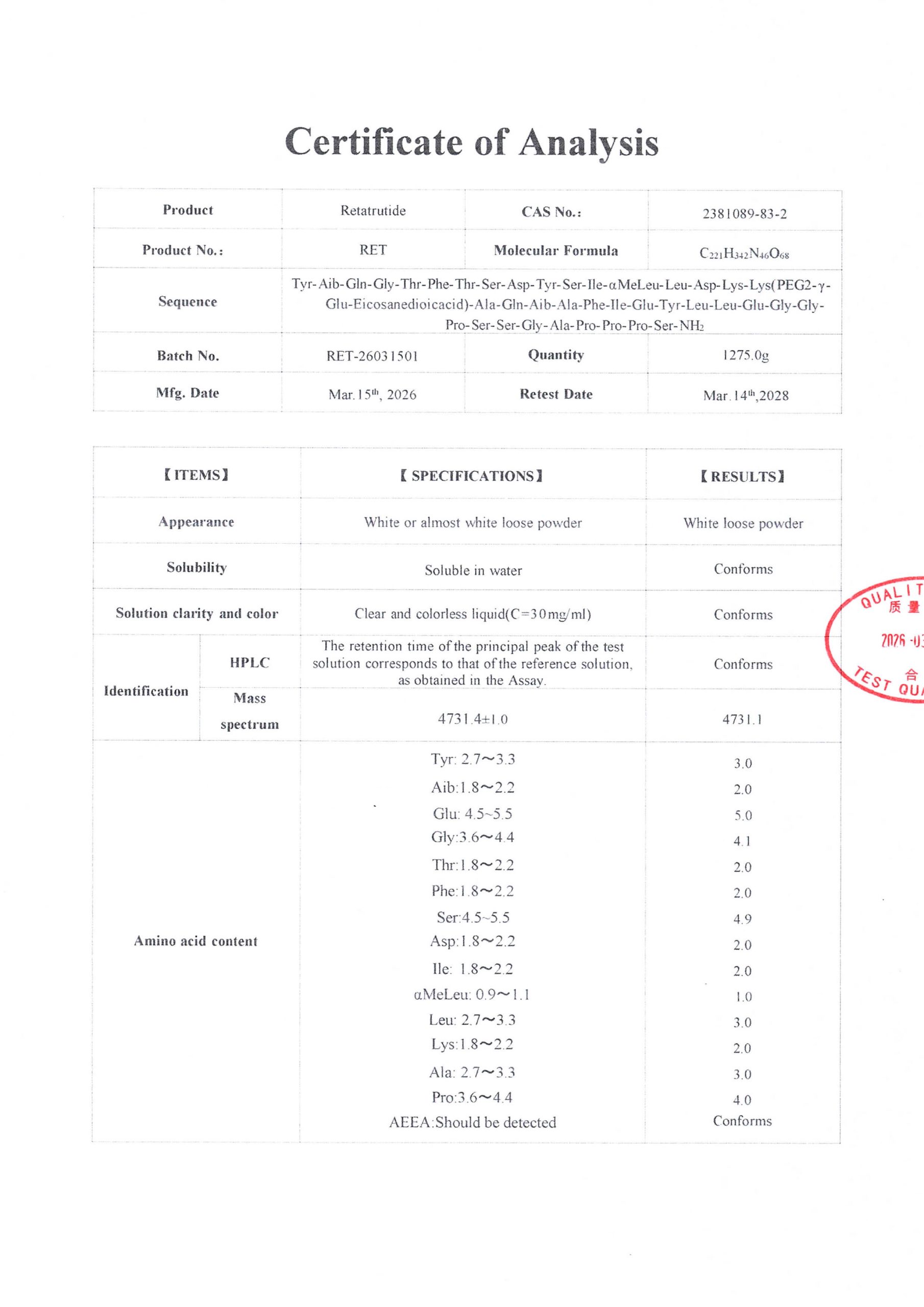 View report
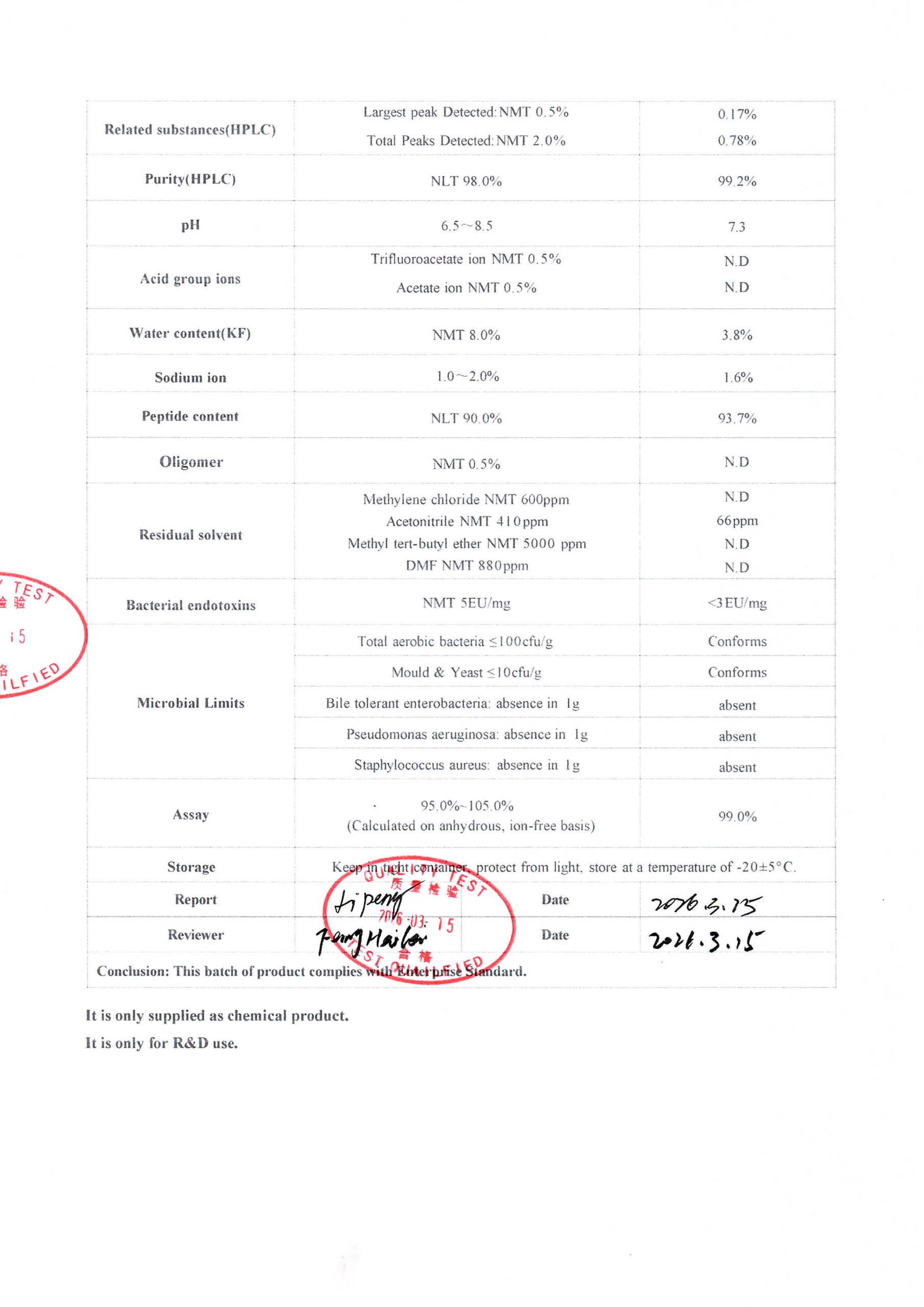 View report
Jude Mercer –
I’ve spent 6 months running dual GLP-1/GIP receptor research, and this RT10 Retatrutide completely changed my trial data consistency. The ≥99% HPLC purity means no impurity noise messing with my glucose tolerance readouts. I follow the 20–25°C room temp storage rule strictly—tried freezing a test vial once, and the peptide lost nearly all dual agonist activity after thawing. After reconstitution, the solution stays clear for 5 days refrigerated, and weekly low-dose cell treatments match the documented once-weekly administration profile perfectly.
Sylvia C. –
Every vial delivers the same reliable potency, no weak doses. My hunger stays fully suppressed for the full seven days. I only get mild light nausea the first day after injection. The lyophilized powder dissolves completely with zero leftover sediment.
Elida Pruitt –
Each vial inside the standard 10mg×10 bulk kit holds loose free-flowing lyophilized powder that dissolves fully into crystal-clear particle-free liquid. The airtight blue aluminum flip cap blocks ambient moisture completely, so the powder never clumps even after repeated syringe punctures to draw tiny aliquots for subcutaneous injection animal trials.