

Description
Basic introduction
BPC-157 is a synthetic pentadecapeptide investigated in preclinical tissue-response models. This is a single-material BPC-157 listing. It should not be confused with a combination kit containing thymosin-related peptides or other compounds.
The relevant research includes cultured tendon cells and animal injury models. Those experiments provide context for laboratory investigation, while the identity and composition of the supplied material must be established from its batch documentation.
Mechanism of action · Research context
Tendon cell response
Rat tendon fibroblasts have been studied with BPC-157. One primary study examined changes in growth-hormone receptor expression, providing a specific cellular endpoint rather than a general measure of tissue healing.
Growth-factor responsiveness
Receptor expression can influence a subsequent cellular response. In the same experimental setting, investigators evaluated signaling after growth-hormone exposure, including the JAK2 pathway; this does not establish direct growth-hormone activity for BPC-157.
Model-specific interpretation
Cell assays and animal injury studies answer different questions. Viability, migration, receptor abundance and tissue mechanics need separate measurements, with comparison groups appropriate to each experimental model.
Extended research considerations
Connective-tissue experiments
A useful study record identifies the tendon or cell source, passage, culture conditions and measurement interval. Differences in these factors can affect comparisons between publications and between laboratory batches.
Identity and purity
Confirm the peptide sequence and analytical identity before comparing results. Chromatographic purity is a separate measurement from peptide content, counterion composition or biological activity.
Single material versus blends
Combination experiments need separate component controls. Evidence from BPC-157 alone cannot establish the effect of a BPC-157/TB-500 mixture, and this product description does not represent the vial as a blend.
Material and packaging
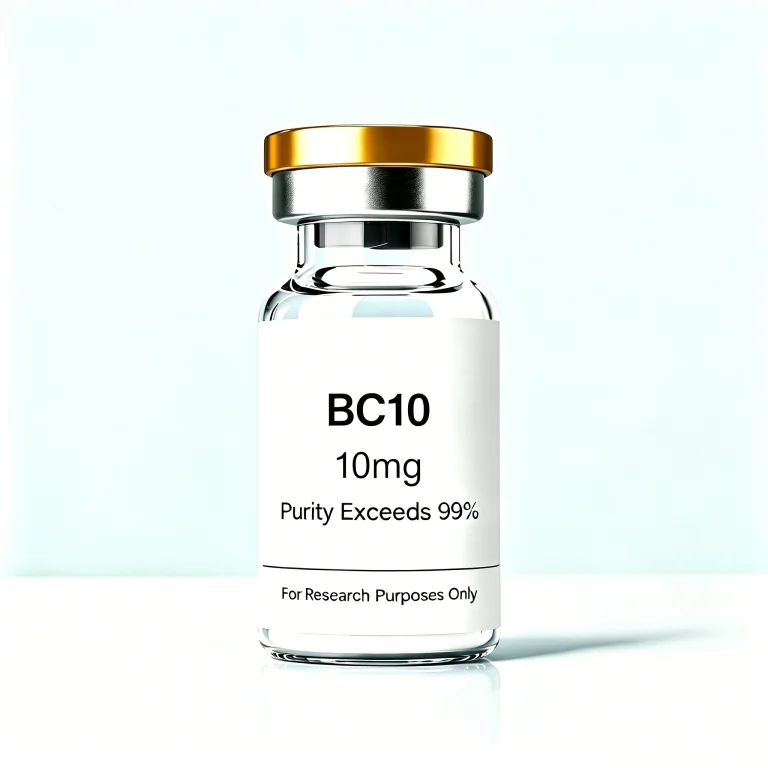
Listed appearance: White Lyophilized Powder.
Available kit specifications: 5 mg × 10 vials; 10 mg × 10 vials. Select an option above to view its current price and availability.
Storage and handling
Source-listed storage condition: Store at 20°C to 25°C (Do not freeze). Follow the handling instructions supplied with the actual batch and your laboratory's procedures.
Analytical documentation
Reference analytical documents are available with this listing. Check the material identity, batch number and test date against the batch supplied; contact us for current batch documentation.
Scientific references
These publications describe the studied molecules and experimental models. They do not certify the identity, quality or effects of a particular supplied batch.
- BPC-157 and growth-hormone receptor expression in tendon fibroblasts
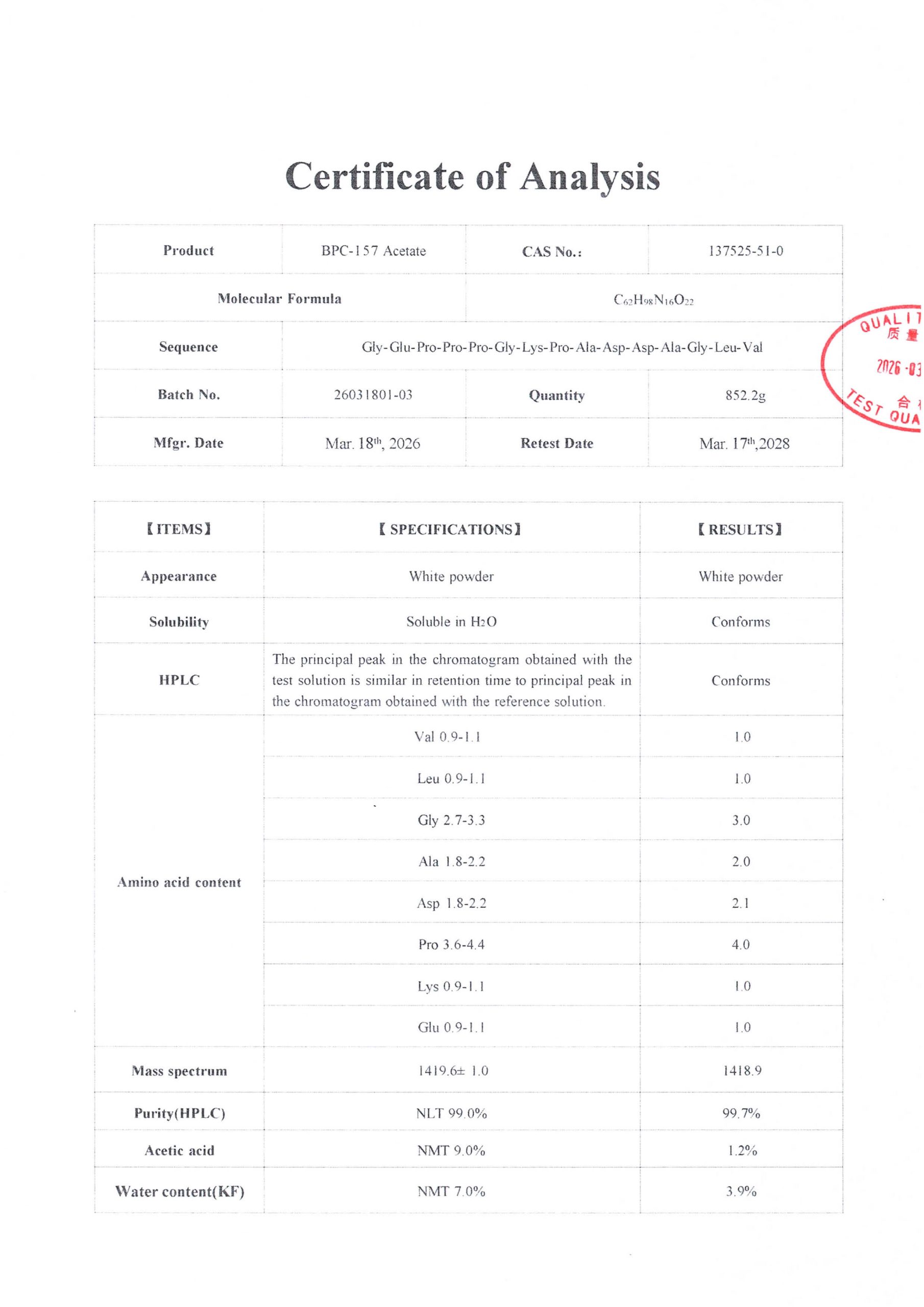 View report
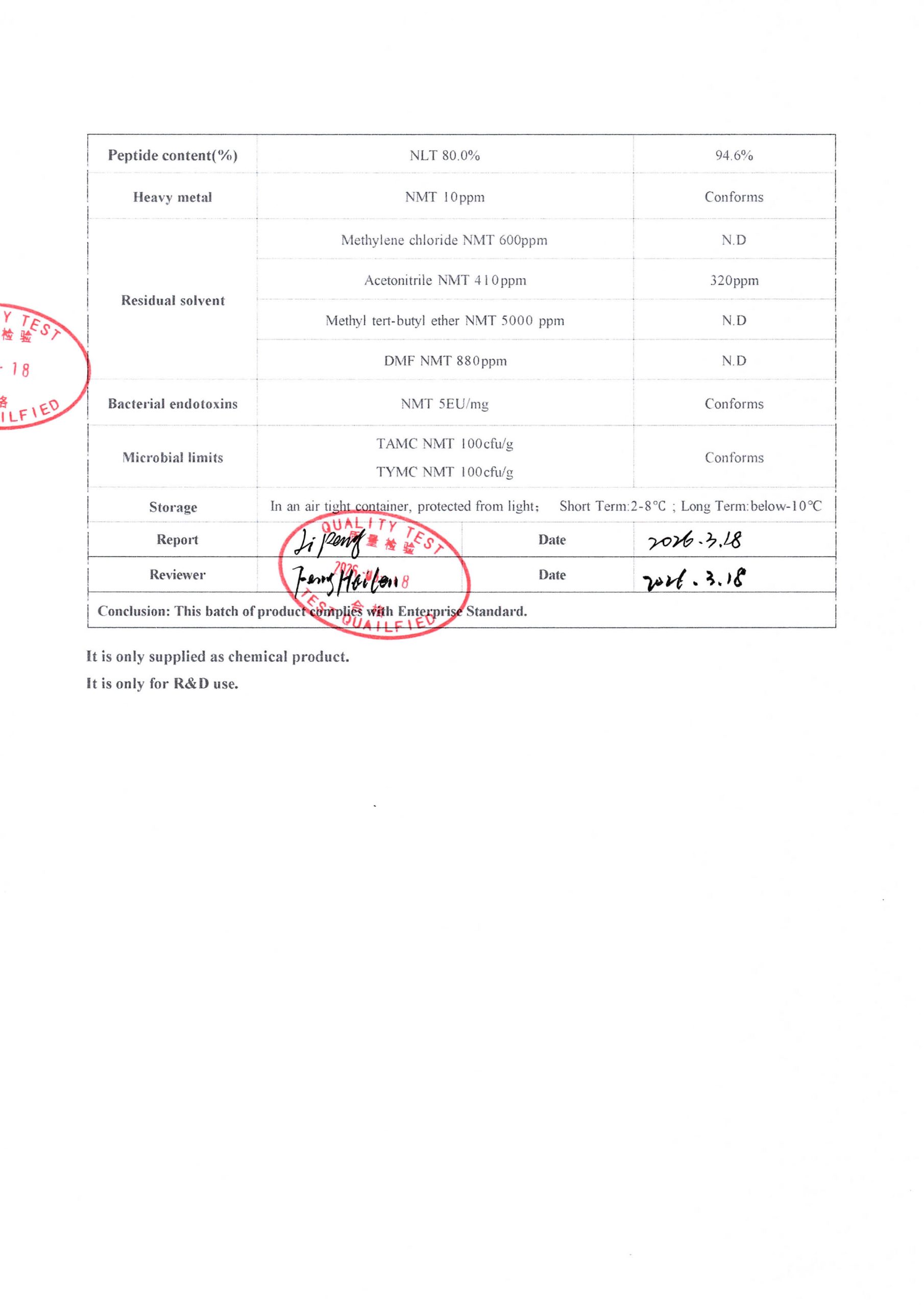 View report
Ignis M. –
Controlled room-temperature storage prevents oxidation and discoloration of the white powder. Reconstituted BPC-157 solution remains crystal clear for 4+ days under refrigeration, with no cloudiness or precipitate formation to skew lab results.
Cian Whelan –
I run tissue repair cell assays, BC5’s ≥99% purity eliminates impurity interference on wound recovery data. Room temp storage 20–25°C, freezing fully ruins its regenerative activity. Powder dissolves clear with no glass residue.
Hugo Lynde –
I restock BC5 monthly for 10 straight months, exclusive BPC-157 supplier for all tissue regeneration research. Stable high purity, dual vial sizes and consistent batch potency fixed all unreliable assay data from cheaper competitors.
Galen V. –
I’ve bought BPC-157 from many suppliers, and this batch is far cleaner. The lyophilized powder stays snow-white inside the vial and dissolves quickly with gentle swirling, no aggressive shaking required.
Ignis X. –
This bulk 10-vial kit has an excellent price during the sale. Vial-to-vial quality is uniform, so my experimental results stay predictable from start to finish. I will keep reordering this batch for long-term cell repair research.