



Description
Basic introduction
ACE-031 is described in research as a soluble activin receptor type IIB–Fc fusion protein. It is a larger recombinant protein construct, not a short peptide, and therefore requires protein-appropriate characterization.
The fusion protein has been studied as a ligand trap in muscle-related research. The original catalog does not provide a comparable long-form detail module, so this overview draws on the molecular identity and primary studies cited below.
Mechanism of action · Research context
Soluble receptor construct
ACE-031 contains an extracellular receptor domain linked to Fc. The soluble form provides a means of studying ligand capture outside the cell rather than direct activation of a membrane receptor.
Ligand trapping
The construct can bind myostatin and related ligands. It should not be described as exclusively myostatin-specific, because broader ligand interactions are relevant to its research interpretation.
Downstream pathway effects
Ligand capture changes the availability of signaling molecules. Assays should distinguish binding capacity from downstream cellular responses, which depend on the ligands and receptors present in the model.
Extended research considerations
Protein quality measurements
Identity, size distribution and aggregation require suitable methods. A short-peptide analytical workflow alone may not establish the integrity of an Fc fusion protein.
Clinical research limits
A Duchenne muscular dystrophy trial was stopped after safety concerns including epistaxis and telangiectasia. The study did not establish a statistically significant improvement in its walking-distance endpoint.
Material comparability
A commercial label is not proof of recombinant-protein identity. Confirm the construct and analytical evidence before comparing a supplied material with a published ACE-031 preparation.
Material and packaging
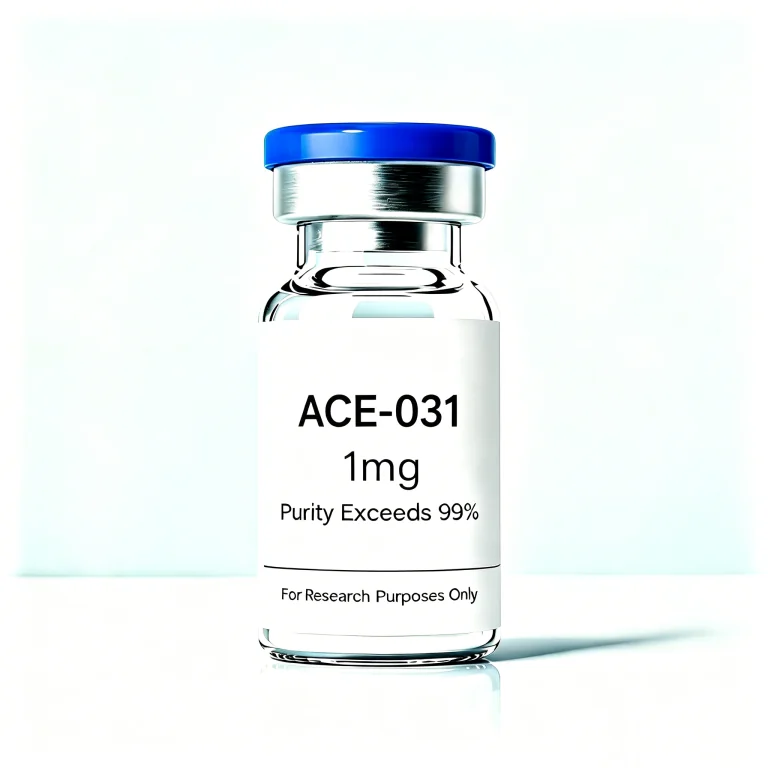
Listed appearance: White Lyophilized Powder.
Available kit specifications: 1 mg × 10 vials. Select an option above to view its current price and availability.
Storage and handling
Source-listed storage condition: Store at -20°C to -80°C (Protect from light and moisture). Follow the handling instructions supplied with the actual batch and your laboratory's procedures.
Analytical documentation
Reference analytical documents are available with this listing. Check the material identity, batch number and test date against the batch supplied; contact us for current batch documentation.
Scientific references
These publications describe the studied molecules and experimental models. They do not certify the identity, quality or effects of a particular supplied batch.
- ACE-031 trial in Duchenne muscular dystrophy
- Soluble ActRIIB in a preclinical muscle model
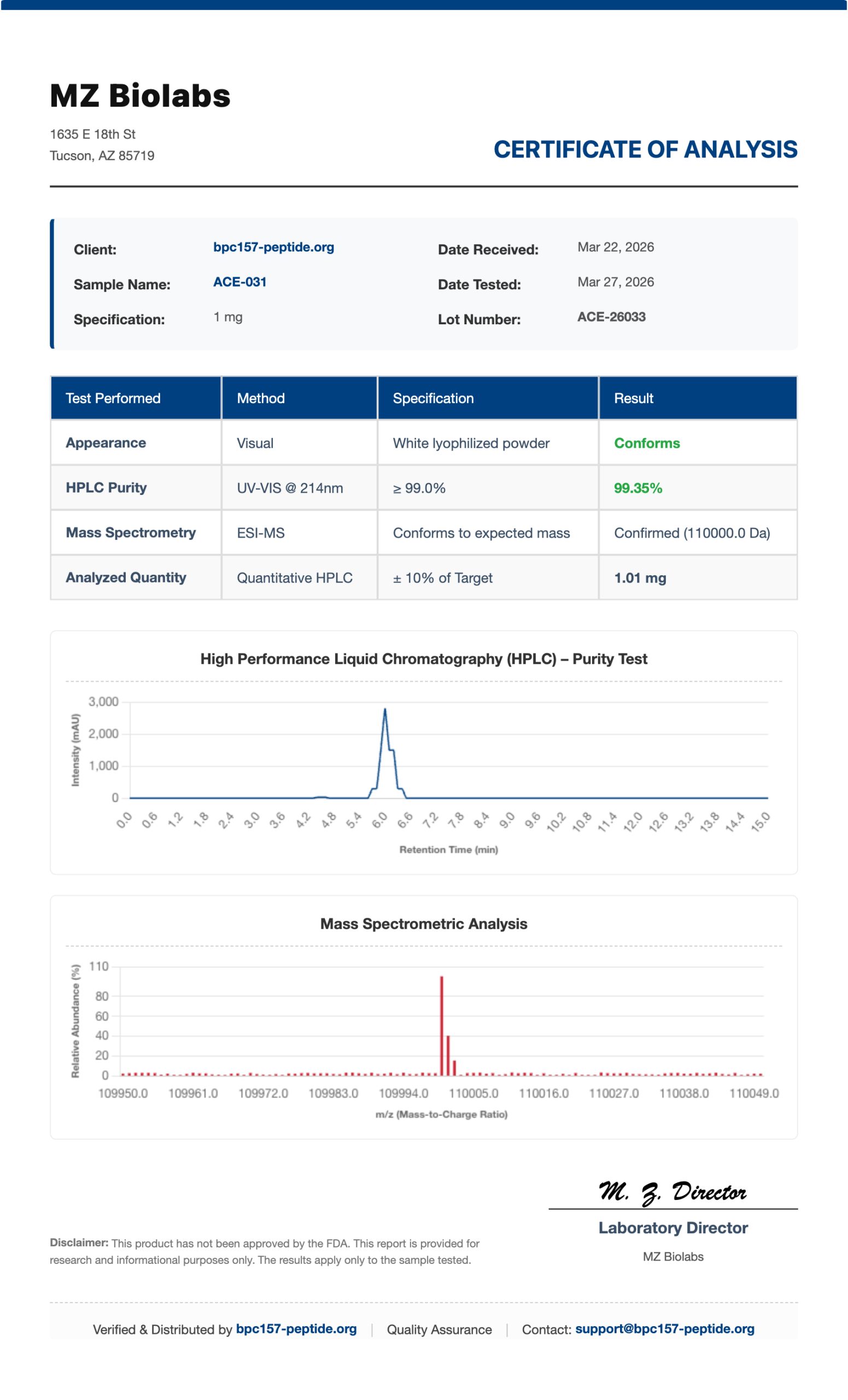 View report
Inez L. –
The lyophilized powder has excellent structural stability. Long-term storage at -80℃ effectively prevents protein unfolding. SEC-HPLC retesting after three months still showed no obvious aggregation, and the binding activity to myostatin stayed at the original level.
Opal R. –
After multiple reorders, the purity and biological activity never fluctuate. This ACE-031 always delivers reliable experimental data, so it has become my primary myostatin inhibitor for long-term muscle research projects.
Carol I. –
Vial consistency across the whole 10-vial kit is extremely reliable. Every vial holds loose, uniform powder with zero caking from moisture. It dissolves fully into a clear liquid after reconstitution with no solid residue left on the glass.
Marnie P. –
This 1mg single-dose specification avoids repeated freeze-thaw cycles for leftover protein. Each vial is fully consumed in one experiment, so I don’t risk losing activity from repeated temperature changes.
6
Brent H. –
This ACE-031 fusion protein is high-grade white lyophilized powder. SDS-PAGE and SEC-HPLC testing confirm purity exceeds 98%. When sealed tightly and stored deep frozen between -20℃ and -80℃ away from light and humidity, the homodimer protein structure stays intact with no degradation over many months.